
Resonance of Fate Gun Customization: Charges and Parts
Learn Resonance of Fate gun customization through charge speed, acceleration, magazine capacity and attachment layouts, without invented optimal builds.
On this page
- Begin with the weapon's role
- Distinguish charge speed from acceleration
- Keep magazine capacity in the comparison
- Treat bullet focus as a separate characteristic
- Read attachment layouts as connection plans
- Match the build to current progression
- Separate equipment improvement from leveling
- Budget for a purpose instead of farming blindly
- Evaluate a build without inventing an optimum
- A documented layout control
- Sources and version limits
Begin with the weapon's role
Before changing a firearm, decide what you want it to accomplish in your battle sequence. The collected research distinguishes machine-gun scratch damage from handgun direct damage, so the two weapons contribute to the same outcome in different ways. A useful customization decision starts with that practical role rather than a desire to make every displayed statistic look equally large.
If the weapon is preparing scratch damage, ask whether it is doing that reliably in the encounters you currently face. If it is converting prepared damage, ask whether the party can deliver that conversion when it matters. Those questions help connect equipment changes with the combat system without inventing numerical damage targets that were never supplied by the sources.
Distinguish charge speed from acceleration
The collected customization module identifies charge speed as the variable affecting the first charge level and charge acceleration as the variable improving later charges. They are therefore related but different reasons why one setup can feel more effective than another. Seeing a high initial-speed number does not, by itself, explain how the weapon performs when you continue charging.
The Steam discussion linked in the collected research makes the same conceptual distinction through player advice, which is useful corroboration rather than an official formula. When comparing parts, state which portion of the charging process you want to improve before deciding that an attachment is an upgrade. Exact percentage breakpoints, a guaranteed best ratio and remaster-specific balance changes are 待确认 here.
Keep magazine capacity in the comparison
Magazine size is another variable explicitly included in the supplied weapon module, so charging is not the only thing to inspect. A setup should be evaluated as the firearm you will actually use, including its capacity and the rest of its attached components. Avoid describing a build as universally superior on the strength of one statistic while ignoring the other documented characteristics.
An editorial comparison can be simple: identify the current limitation, change a relevant component and observe whether the same kind of battle becomes easier to manage. This does not require claiming an exact improvement percentage that no source has measured. If the result is unclear, return to the reason for the change rather than stacking additional speculative adjustments on top of it.
Treat bullet focus as a separate characteristic
The collected material includes bullet focus alongside charging and magazine capacity, describing it in terms of concentration and accuracy. That makes it a characteristic to review when studying a build, even though this page does not provide a verified minimum threshold for it. A number repeated in a forum recommendation should not automatically become a mandatory rule for every player and weapon.
The safe conclusion is that customization involves several interacting characteristics, not that one player comment establishes a complete optimization model. When a proposed setup changes bullet focus, note that change as part of the tradeoff instead of hiding it behind a larger charge statistic. A tested Enhanced Remaster accuracy table remains 待确认, so no such table is invented below.
Read attachment layouts as connection plans
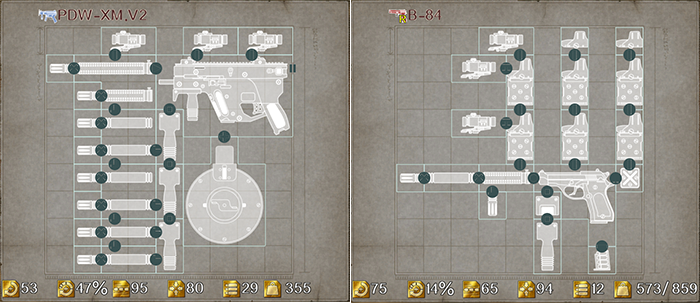
The collected research describes arranging compatible gun parts around available connection points to improve weapon statistics. A layout is therefore more than a list of individually attractive parts, because the arrangement must work with the firearm and connections available to you. Before copying a screenshot, identify which pieces are present and how they are intended to fit together.
If the picture uses components you have not encountered, treat it as an example from a different progression state rather than a missing step in your current menu. The collected material does not contain a complete chapter-by-chapter parts inventory or a verified diagram for every weapon. Exact replacement parts, crafting totals and guaranteed optimal layouts are consequently 待确认 unless they appear in a matching-version source.
Match the build to current progression
Customization advice is more useful when it acknowledges where you are in the story and what equipment you can actually use. A player who has only reached an early mission cannot assume that an endgame arrangement is immediately reproducible. The same applies when a guide discusses late-game farming preparations or weapons shown during optional challenges.
Make an upgrade plan from the parts currently available, then revisit it when progression changes the options. That is an editorial planning method, not a newly discovered unlock schedule or a claim that a specific chapter grants a particular attachment. For the surrounding progression decisions, use the walkthrough overview rather than treating an advanced build image as a campaign route.
Separate equipment improvement from leveling
The collected material repeatedly connects effective combat with weapon setup, while the leveling references discuss weapon proficiency and experience. Those are complementary subjects, so a difficult battle does not automatically prove that more experience is the only answer. Review whether the firearm supports the action you are attempting before committing to a long training session.
Conversely, a better arrangement does not mean that proficiency and progression no longer matter. The practical goal is to identify the limitation you are trying to remove, rather than turning equipment advice into a promise that levels are irrelevant. The leveling page keeps training questions separate so this guide can stay focused on the firearm itself.
Budget for a purpose instead of farming blindly
If an upgrade requires resources, identify the actual component or purchase before choosing how to obtain money. The existing research includes both money farming and material farming as late-game topics, but it does not justify an invented shopping list for your current build. Know the intended change first so that resource gathering has a defined stopping point.
Be especially careful with old claims about endless profit from crafting and reselling scopes, because later Steam material reports a version difference. This page does not use an unverified money exploit as the assumed foundation of weapon progression. The money-farming guide explains that conflict and keeps historical methods separate from guaranteed advice.
Evaluate a build without inventing an optimum
A sensible build description should explain its purpose, the relevant charging characteristics and the attachment arrangement needed to achieve it. It should also state what has not been verified, rather than giving an unexplained best-in-slot label to a screenshot. That standard helps you compare community suggestions without mistaking popularity for a complete controlled test.
For your own play, observe the same kind of problem before and after changing the weapon, while remembering that this is an informal comparison. Keep changes you can explain and reconsider those whose benefit is unclear. A comprehensive Enhanced Remaster optimization ranking is 待确认, so the reliable outcome here is a method for understanding builds rather than a fabricated definitive winner.
A documented layout control
The older customization reference describes a 9-by-9 grid and the ability to reposition the weapon while a custom part is selected. Its console instructions use the right stick for repositioning and shoulder buttons to rotate certain parts. This is historical control guidance, so confirm the prompts in your edition rather than assuming the same buttons apply to every platform.
Sources and version limits
The primary content basis is the weapon-customization research, which lists charging, capacity, focus and attachment layout. The developer website confirms customization as a major system, and the linked Steam player discussion provides supporting explanations rather than official balance guarantees. For historical examples, compare the older customization reference with the edition and progression state you are actually playing.
Related pages
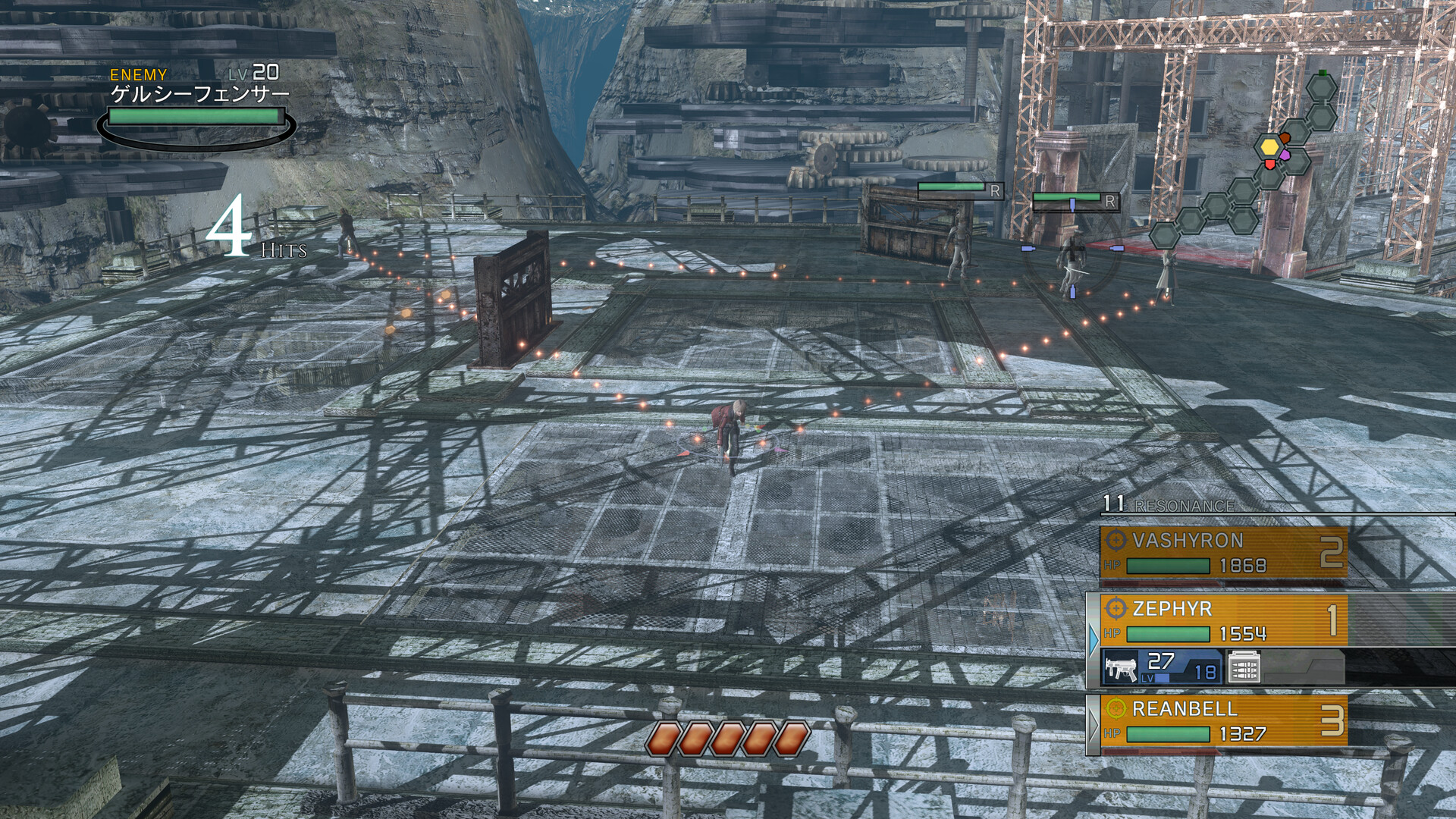
Resonance of Fate Arena: Ranks, Rewards and Preparation
Explore Resonance of Fate Arena progression, chapter gates, Battle Coins and completion goals, while distinguishing old guide data from remaster testing.
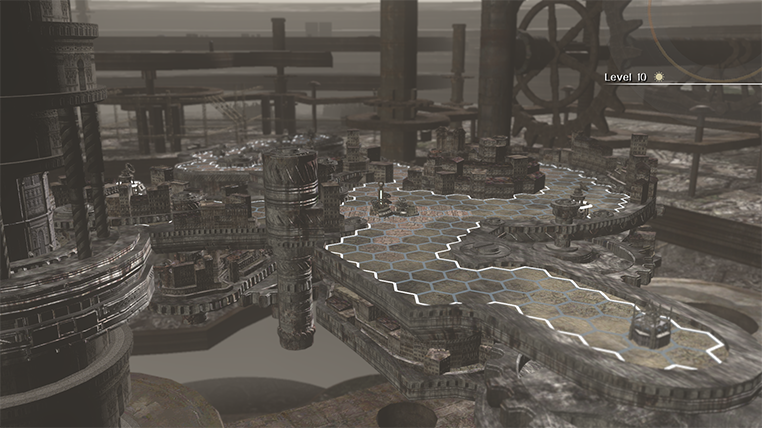
Basel Map Guide
Learn how to explore Basel using the game's distinctive hex-based world map system. Understand how map exploration connects with unlocking areas, discovering locations, and progressing through the story.

Beginner Guide
Start your journey through Basel with an introduction to the game's unusual gun-based combat system. Learn how to approach early battles, use Hero Actions, and prepare your party for increasingly difficult encounters.